Mokha Laget: Intersecting Terrains
Apr 18, 2026 – Jun 11, 2028
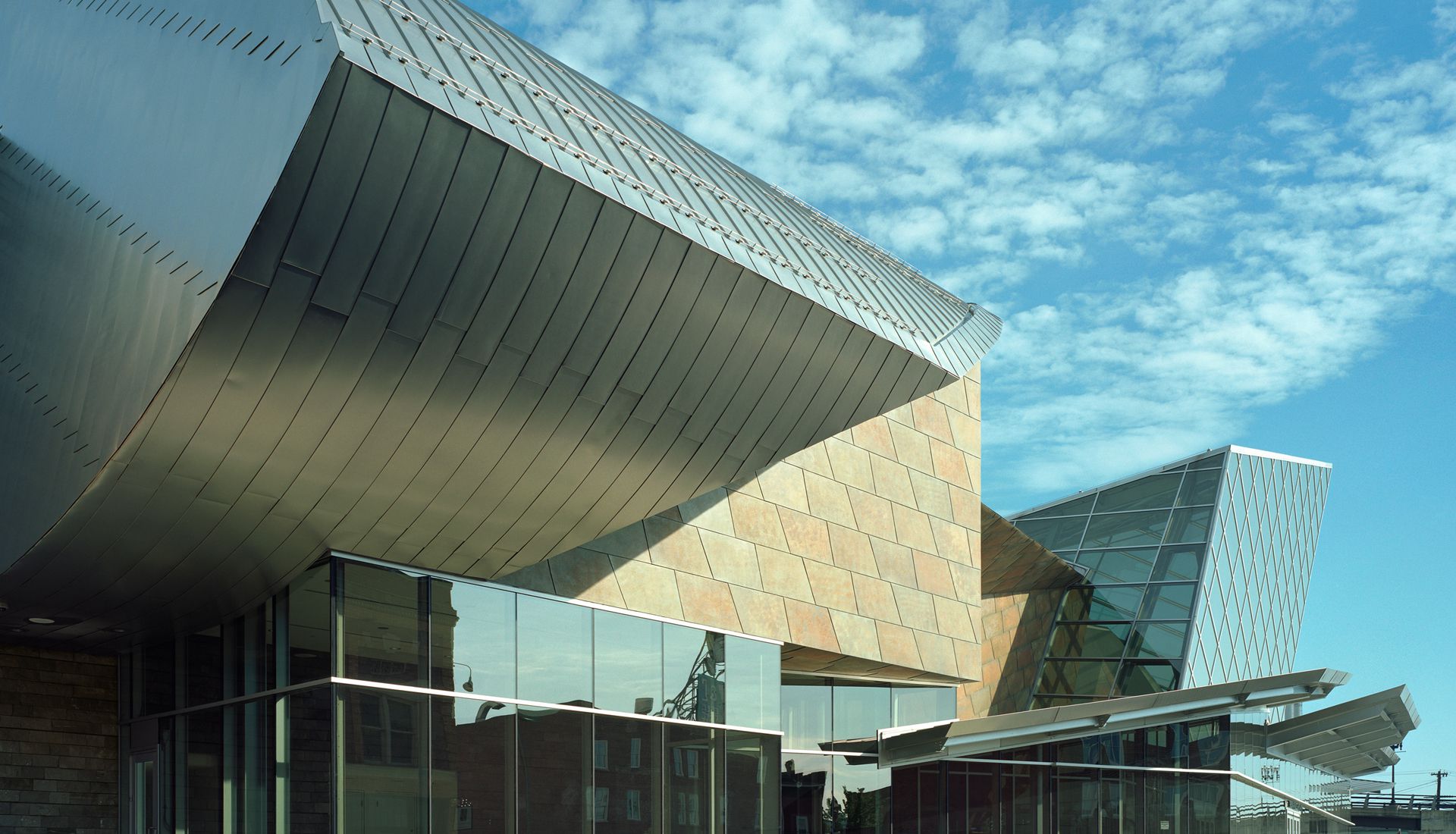
The Taubman Museum of Art celebrates a major milestone in 2026: its 75th anniversary. To mark this significant occasion, the Museum has reflected on how best to honor both its rich history and the vibrant Roanoke Valley community it serves. Central to this celebration is the Museum’s iconic architecture, which embodies the spirit of its surroundings. Designed by the acclaimed architect Randall Stout, the building itself is a striking tribute to the landscape, with dynamic lines, sweeping curves, and innovative forms that echo the natural beauty of the region.
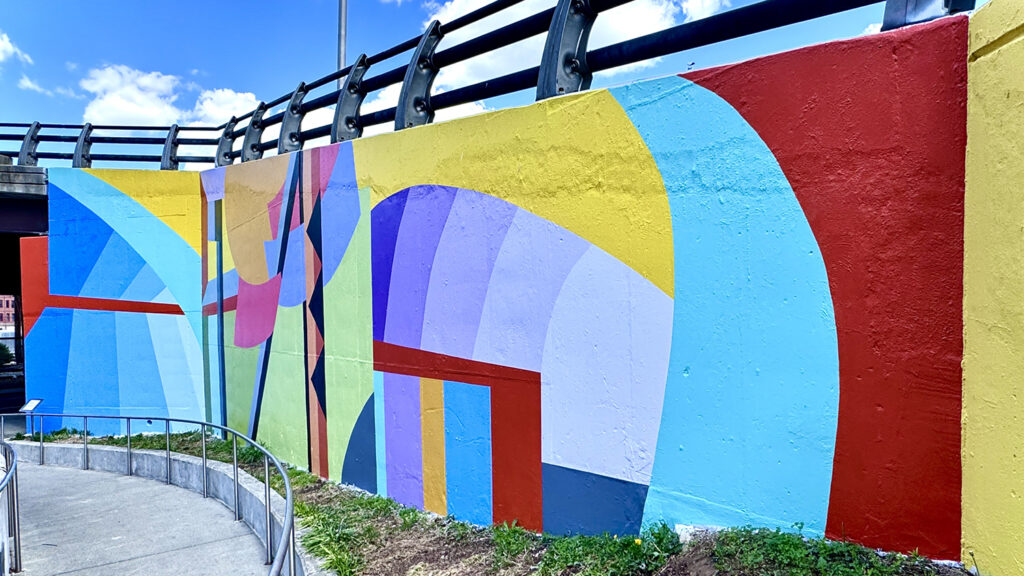
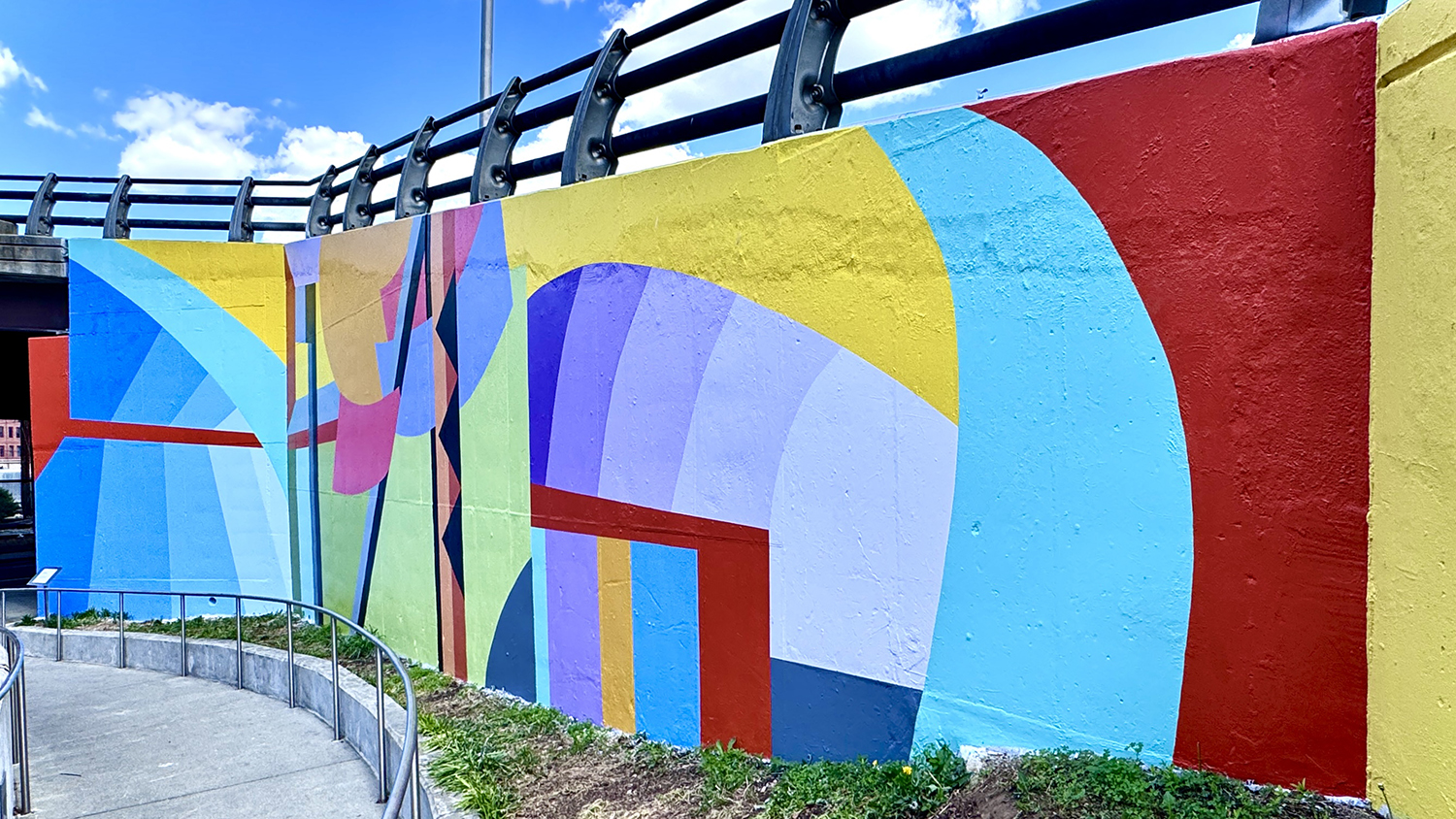
Mokha Laget was commissioned to reinterpret the Museum’s architecture through her distinctive abstract style, translating structural forms and spatial dynamics into vibrant, evocative compositions. The title, Intersecting Terrains, engages the geometry of Randall Stout’s design, while evoking regional geology, history and abstraction. It gestures conceptually to Laget’s practice: layered terrains across scale, intersecting forms, and perceptual systems in motion. The mural invites viewers to experience landscape as interconnected: ecological, architectural, historical, and abstract- rather than separate or static.
The mural for the Taubman Museum is conceived as a dialogue between architecture, landscape, and abstraction. Drawing from Randall Stout’s masterful design, its composition mirrors the building’s multi-faceted geometry while evoking the surrounding layered planes and shifting tonalities of the Blue Ridge. The palette of ochres, greens, and silvery blues references the region’s ecology, while deep black accents allude to the area’s coal mining history. Flowing contours evoke the movement of water, the lifeblood of the region and a tribute to the ancestral Monacan peoples who first inhabited these lands. Intersecting lines and forms suggest a network of connectivity between natural systems, human histories, and architectural space, expressing how these layers of meaning interweave within my signature language of geometric abstraction.
KEEP EXPLORING
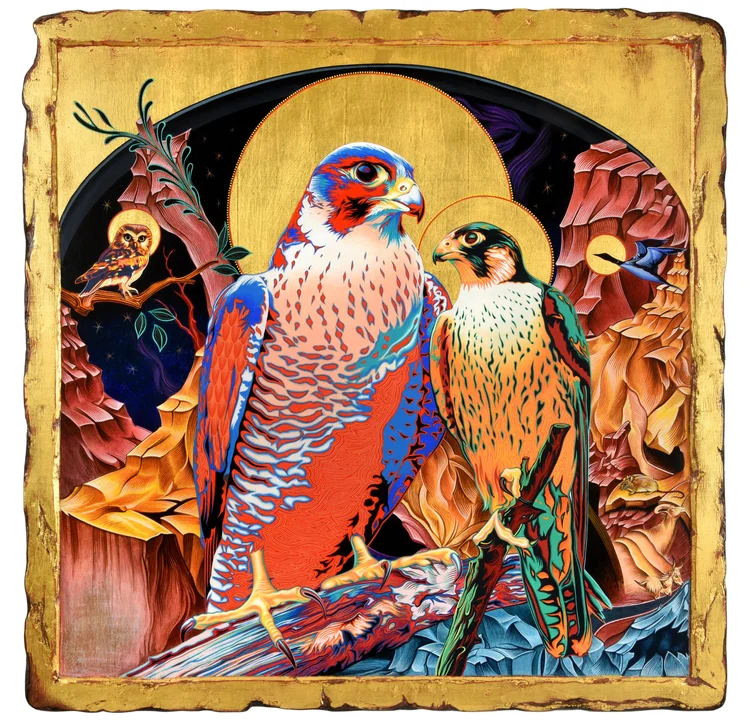
Reimagining Reverence: A Spotlight on Gilded Icons
View Exhibit